
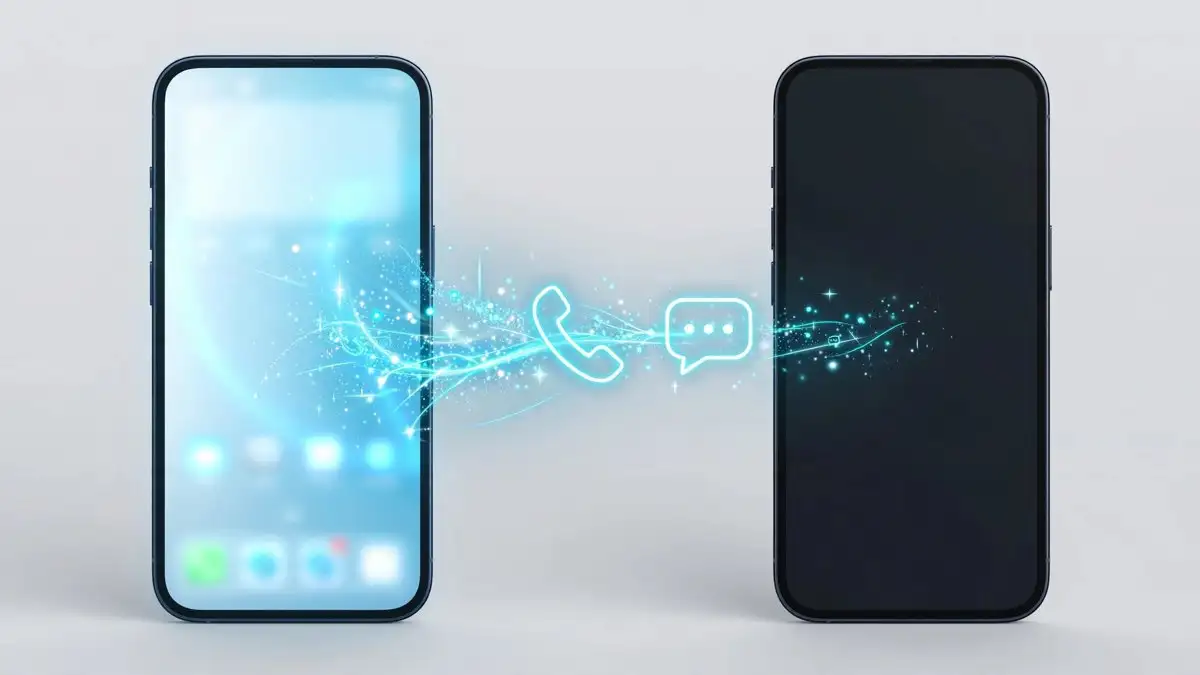
Carrying two iPhones used to mean choosing which one got your calls. With iOS 27, Apple lets one phone number live on two iPhones, moving between them as you pick each one up. The feature is called iPhone Handoff, and it works, but only if your carrier supports it. Right now, exactly three carriers in the world do.
The idea is straightforward. Your number is active on one iPhone at a time. Unlock the other phone and the number moves there, along with your calls, voicemail, messages, and Find My location. It is not a second line, and the two phones never ring at once. Think of it as one number with two handsets, and whichever handset you are holding is the live one.
Which carriers support iPhone Handoff today
As of November 24, three carriers offer iPhone Handoff, and the list has barely grown since iOS 27 launched in September:
| Carrier | Market | Status | Price |
|---|---|---|---|
| T-Mobile | United States | Available | $5 per month |
| Deutsche Telekom | Germany | Available | €6.95 per month |
| EE | United Kingdom | Available | £5 per month |
| Verizon | United States | Coming soon | $10 per month, planned |
| AT&T | United States | No commitment | Not announced |
EE is the newest addition. The UK network now offers the feature at £5 a month, or included free with its Full Works Plus plan. Deutsche Telekom charges €6.95 a month, but only on plans that do not already include multi-SIM service, so it is free on MagentaMobil L and XL. T-Mobile’s $5 a month works out to $60 a year, roughly ₹440 a month at current exchange rates, for the convenience of a second handset on the same number.
Verizon has promised it will support iPhone Handoff later this year and says it will charge $10 a month when it launches, double T-Mobile’s price. AT&T has made no commitment at all, pointing instead to its existing eSIM activation and transfer options. No carrier in India has announced support, so for now the feature is out of reach for Indian iPhone owners, whatever their plan.
What you need before you set it up
Both iPhones must run iOS 27 or later, share the same Apple Account, stay connected to Wi-Fi, and use Messages in iCloud with FaceTime and iMessage signed in under that account. The number has to be on an eSIM from a carrier that supports iPhone Handoff, and that is the real gate. An iPhone running iOS 27 is not enough on its own.
Dual SIM users are covered too, with a catch. Both eSIMs need to come from carriers that support the feature, and each one has to be set up separately, one at a time. Once set up, both eSIMs switch together when you unlock a phone.
How to set up iPhone Handoff
You can enable it when you set up a new iPhone, or add it to a phone you already use. On the second iPhone, open Settings, then Cellular, then tap Set Up Cellular or Add eSIM. Choose the option to use the number on this iPhone and another, and follow the prompts on both phones. After that, unlocking a phone moves the number to it.
Everything follows the number: calls, voicemail, iMessage, RCS, SMS, MMS, and Find My location. The switch happens on unlock, so there is no button to press and no app to open. If you pick up the other phone, that one becomes live, and the first one goes quiet.
Who this is actually for
The obvious audience is anyone who carries a work phone and a personal phone, or keeps an older iPhone as a backup and wants the same number on both. It also suits travellers who want a cheap local handset on the same number, and people who keep a second phone at home or in the car. What it does not do is give you two active lines, so if you need both phones to ring at once, a second SIM or a dual SIM setup is still the answer.
The other question is whether it is worth paying for. At $5 a month on T-Mobile, or £5 on EE, it is a modest add-on for someone who already carries two iPhones, and it is free on some premium plans. At Verizon’s planned $10 a month, the maths gets harder, especially when a free eSIM transfer between phones already covers the occasional swap.
The feature will matter a lot more when the carrier list grows. Apple has the software ready, and the iPhone 18 and iPhone 18e are due in spring 2027, which will put a lot of new two-iPhone households in the world. Until more carriers sign up, though, iPhone Handoff is a neat trick for a small club: T-Mobile, Telekom, and EE customers, and everyone else is still waiting.
Sources: 9to5Mac, MacRumors, Gadget Hacks. Also see what else iOS 27.3 brings, our iPhone 18 Pro vs iPhone 17 Pro comparison, and the spring 2027 launch dates for iPhone 18 and iPhone 18e.