
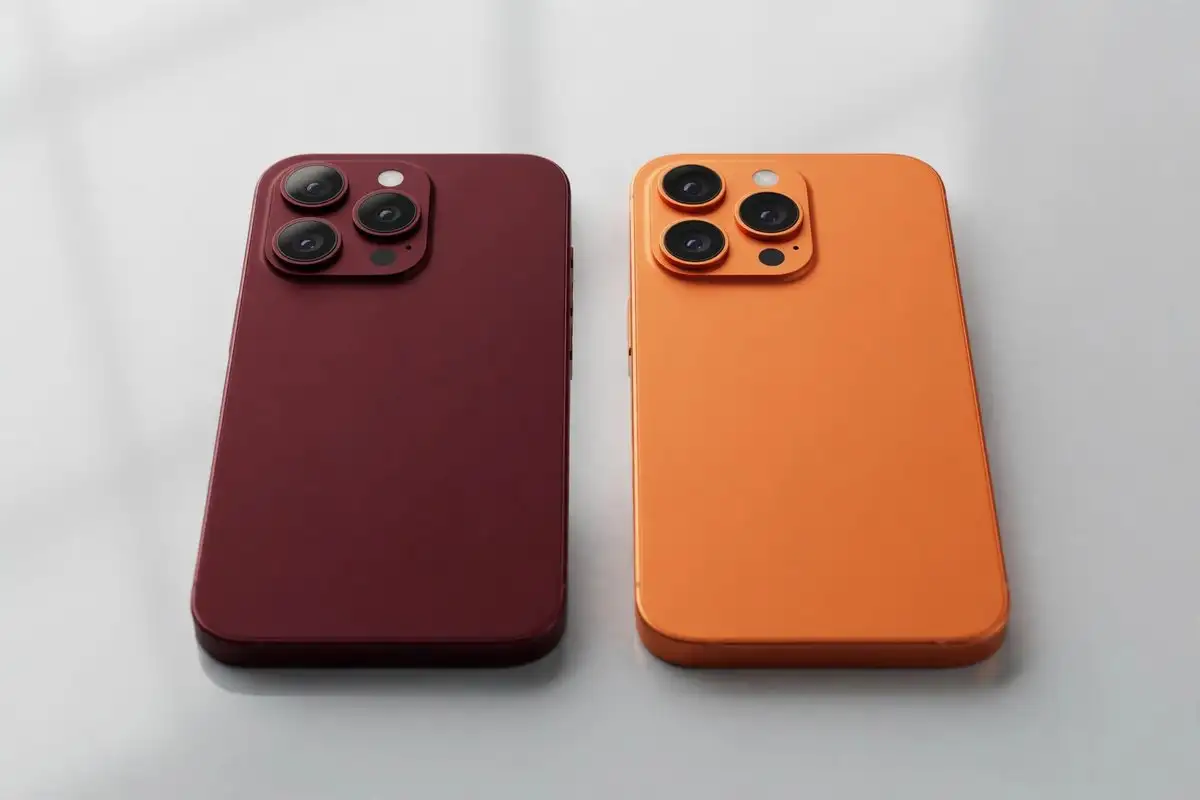
The iPhone 18 Pro costs $100 more than the iPhone 17 Pro did at launch, and Apple changed the chip, the main camera, the battery, and the storage ceiling to justify it. The two phones look almost identical, they share the same 6.3-inch screen and the same aluminium unibody, and they both run iOS 27. So the real question is not which phone is better, it is whether the differences are worth $100, or in India ₹30,000.
After two months on sale, the picture is clear enough to call. The 18 Pro is the better phone in every measurable way, but the 17 Pro was already so good that most owners should keep it. Here is what actually changed, and who should care.
The spec sheet, side by side
| Feature | iPhone 18 Pro | iPhone 17 Pro |
|---|---|---|
| Starting price | $1,199 (₹1,64,900) | $1,099 at launch (₹1,34,900) |
| Chip | A20 Pro, 2nm | A19 Pro, 3nm |
| CPU / GPU | 6-core CPU, 7-core GPU | 6-core CPU, 6-core GPU |
| RAM | 12GB | 12GB |
| Main camera | 48MP Fusion, variable aperture f/1.48 to f/4.0 | 48MP Fusion, fixed f/1.78 aperture |
| Video playback | Up to 36 hours | Up to 33 hours |
| Charging | 50% in around 15 minutes with a 60W adapter | 50% in 20 minutes with a 40W adapter |
| Dynamic Island | Smaller, up to 3 Live Activities | Up to 2 Live Activities |
| Modem | Apple C2 | Qualcomm X80 |
| Storage | 256GB, 512GB, 1TB, 2TB | 256GB, 512GB, 1TB |
| Weight | 211 grams | 206 grams |
| Colours | Black, Silver, Glacier, Burgundy | Cosmic Orange (signature colour) |
The A20 Pro is the biggest jump
The A20 Pro is Apple’s first 2nm smartphone chip, built on TSMC’s N2 process, and it is a bigger generational step than the A19 Pro was. Apple says the 7-core GPU is up to 40 percent faster than the A19 Pro, the 32-core Neural Engine doubles AI processing, and memory bandwidth is up 50 percent. The redesigned vapor chamber has about three times the surface area of the 17 Pro’s, which Apple says delivers up to 40 percent higher sustained performance.
In everyday use, that mostly shows up in games and in long video exports, where the 17 Pro would eventually warm up and throttle. If your heaviest workload is messaging, browsing, and photos, the A19 Pro was already far faster than anything those tasks need, and the A20 Pro will not feel different. The chip matters most to people who shoot and edit video on their phone, or who play demanding games for long sessions.
The variable aperture camera is the real reason to upgrade
The camera is the change that justifies the 18 Pro on its own, if photography is what you care about. The 48MP Fusion Main camera now has a physical variable aperture with six laser-cut blades, moving between f/1.48, f/1.8, f/2.8, and f/4.0. The 17 Pro’s main camera has a fixed f/1.78 aperture, so it cannot do this at all.
What that buys you in practice is control. Wide open at f/1.48, the camera pulls in more light for night shots and gives portraits a shallower depth of field. Stopped down to f/4.0, group photos and landscapes stay sharp edge to edge. The Camera app finally has proper manual controls for aperture and shutter speed, alongside smart focus tracking, improved low-light video, and Apple Reference Image. Photographic Styles go from two to three.
The ultra wide and telephoto cameras are the same 48MP Fusion units on both phones, with 8x optical zoom, so the difference is concentrated in the main camera. If you shoot mostly with the main lens, and especially if you shoot in low light, the 18 Pro is a genuine step up. If you mostly point and shoot in daylight, you will struggle to tell them apart.
Battery life and charging: a real, if modest, gain
Apple rates the iPhone 18 Pro for up to 36 hours of video playback, against 33 hours for the 17 Pro, and the Pro Max stretches that gap further, 45 hours against 39. Independent testing backs the improvement up: the iPhone 18 Pro Max topped CNET’s 32-phone battery test, and the standard 18 Pro finished near the top as well.
Charging gets quicker too, with 50 percent in around 15 minutes using a 60W adapter, against 20 minutes with a 40W adapter on the 17 Pro. Three extra hours of video and five minutes faster to half charge will not change anyone’s day on their own, but they add up over two or three years of ownership, which is how long most people keep a Pro iPhone.
What it costs, in the US and in India
| Storage | iPhone 18 Pro (US) | iPhone 18 Pro (India) | iPhone 17 Pro at launch (US) |
|---|---|---|---|
| 256GB | $1,199 | ₹1,64,900 | $1,099 |
| 512GB | $1,399 | ₹1,89,900 | $1,299 |
| 1TB | $1,799 | ₹2,39,900 | $1,499 |
| 2TB | $2,399 | ₹3,14,900 | Not available |
The price gap is wider in India than in the US. The 18 Pro starts at ₹1,64,900, a flat ₹30,000 more than the 17 Pro’s ₹1,34,900 launch price, roughly a 22 percent jump. Apple and its retail partners are softening that with up to ₹7,000 cashback on select cards and no-cost EMI plans, and trade-in credits reach up to ₹81,500 for older devices.
The 17 Pro is discontinued by Apple, so you cannot buy it from Apple Stores any more, but carriers and third-party retailers are still selling remaining stock, often discounted. A discounted 17 Pro at $999 or below is a genuinely good buy, and it is the deal to look for this holiday season.
Who should buy which
If you own an iPhone 17 Pro, keep it. The 18 Pro is better, but nothing about the 17 Pro suddenly feels outdated, and both phones run the same iOS 27 with the same Siri AI features. The upgrade only makes sense if you shoot a lot of photos in low light, or you push the chip hard enough to feel the sustained performance difference.
If you are buying new and choosing between the two, the 18 Pro is the right pick at full price, and the gap is only $100 in the US. The variable aperture camera, the 2nm chip, and the extra battery life are worth that over a phone you will keep for three years. But if you find a 17 Pro discounted by $150 or more, take it and spend the difference on something else. And if you are torn between the Pro and the foldable, our iPhone Duo versus Galaxy Z Fold8 comparison covers the other side of that decision, while the standard iPhone 18 arrives in spring 2027 for buyers who do not need Pro features at all.
Sources: MacRumors, Digital Trends, PhoneArena, WhistleOut, MacObserver, 91mobiles, Gadgets360. Prices are Apple’s list prices at launch; carrier and retailer prices vary.