
[ad_1]
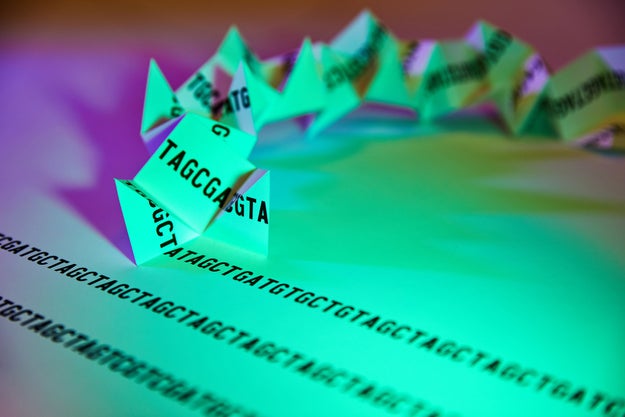
National Human Genome Research Institute / Via genome.gov
A bruising battle over rights to a landmark gene editing technology threatens to block its benefits, such as new vaccines or killing pests that carry disease, when they won’t lead to profits.
The “CRISPR” system is a simple gene editing apparatus in bacteria that wards off invading viruses. In the last few years, scientists have deployed it in everything from amoebas to human cells, confirming its ability to swiftly and precisely add and remove genes from them.
Two university teams who did foundational work showing how CRISPR works — one from Massachusetts, the other from California — are fighting in patent court to stake their claim to CRISPR invention rights, and by extension, to the profits from therapies developed from it.
Last week, three judges of the US Patent and Trademarks Office delivered a crucial decision in the case: They said that the Massachusetts team — MIT, Harvard College, and the Broad Institute — could keep the patents that their University of California opponents claimed were derived from their own work.
When valuable biotechnology tools were discovered in the past, universities usually kept the licensing rights. What’s different with CRISPR is that both university teams have passed on exclusive licenses for human therapies to startups: Editas Medicine, which was founded by Broad scientist Feng Zhang in 2013, and Caribou Biosciences, founded by Jennifer Doudna, of UC Berkeley, in 2011.
Experts are worried that companies under pressure to deliver profitable returns aren’t the best gatekeepers to a tool that has the potential to do seemingly endless good.
“It could really cast a shadow over low-margin applications in public health and environmental applications, which are potentially valuable in social terms but harder to monetize,” Robert Cook-Deegan, a professor at Arizona State University, told BuzzFeed News in an email.
Young companies exploring non-blockbuster applications could have a particularly hard time mustering the initial funds required to get their idea off the ground.
“What if a smaller company wanted to work on a rare disease? What are they looking at in terms of a financial cost, the upfront payment?” Eleonore Pauwels, a science policy expert at the Woodrow Wilson International Center for Scholars, told BuzzFeed News.

Anna Webber / Getty Images
Pauwels is among those who argue that CRISPR should be “open-source” and available for free, like the Internet, because it is too foundational a tool.
Biohackers in the DIY-bio community share that spirit — Pauwels said she expected members of that group to tinker away at applications heedless of the lawsuits it could prompt. “I wouldn’t be surprised to see some rebellion there,” she said.
There are some exceptions to the licensing roadblock.
Government agencies like the US Army Corps of Engineers or the Centers for Disease Control and Prevention are exempt by law from paying for a license, if they launched a search for, say, a vaccine that used CRISPR.
There is also the possibility that applications that won’t make money could thrive because they simply don’t pose a competitive threat to the likes of Editas and Caribou.
IP expert Kevin Noonan, of the firm McDonnell Boehnen Hulbert & Berghoff LLP, said that companies like Editas and Caribou could be persuaded by non-profits pursuing public health applications to offer licensing terms that are much more affordable than those tailored to a competitor.
These arguments will be moot when the patents expire, likely in 2032.
“Twenty years from now, everybody is going to be using CRISPR and paying nobody,” Noonan said.
LINK: DNA Biohackers Are Giving The FDA A Headache With Glow-In-The-Dark Booze
LINK: A Nasty DNA Patent Fight Just Ended But Experts Are Still Confused
LINK: Jennifer Doudna Has Won A CRISPR Gene-Editing Patent
[ad_2]
