
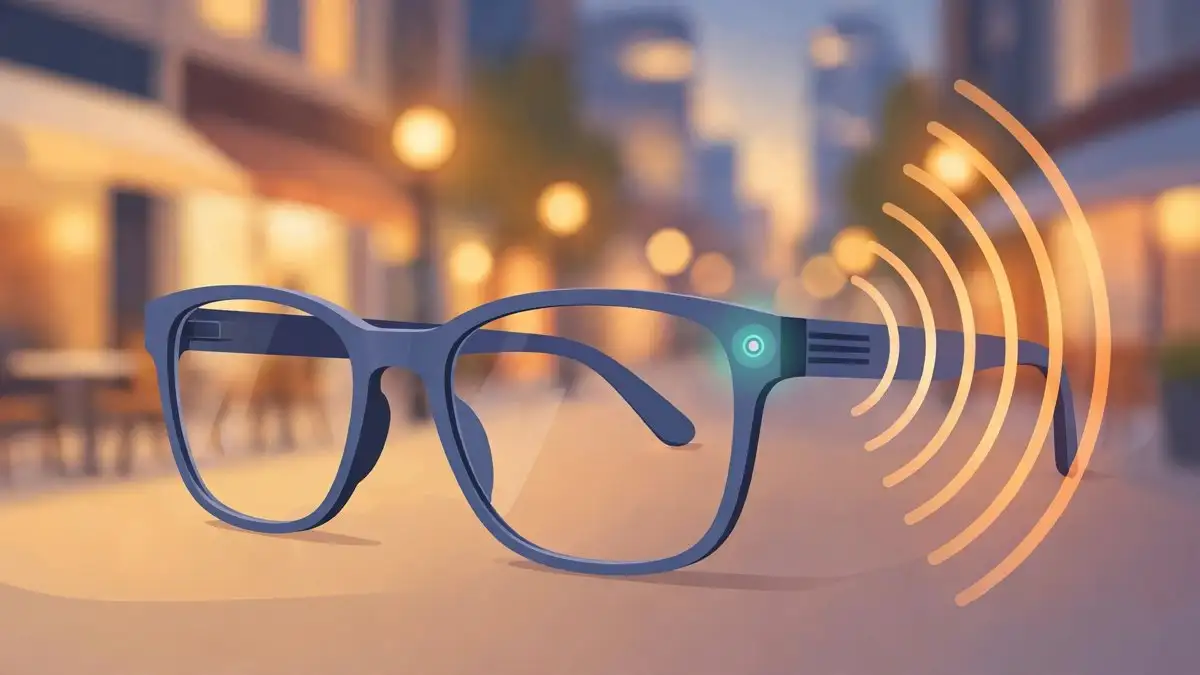
Samsung’s first AI smart glasses are almost here, but most of the world will have to wait. According to a report from South Korean publication ChosunBiz, carried by SamMobile, TrendForce, and others on November 2, Samsung plans to launch its Intelligent Eyewear in mid-December, starting in just two countries: South Korea and the United States. Europe, China, Japan, and the rest of the world follow in 2027.
The timing is a slip. Samsung had pointed to a November launch as recently as early October, according to The Korea Herald. The new date pushes the glasses a few weeks, into the final stretch before the holidays, and the price is still not final. Here is what is known, what is still missing, and how the glasses stack up against Meta’s Ray-Bans, the product they are clearly built to challenge.
What the glasses actually do
Intelligent Eyewear is Samsung’s name for its first-generation AI glasses, developed with Google and Qualcomm. They run Google’s Android XR platform, with Gemini handling the AI features. There is no display in this first model. Instead, a camera, microphones, and speakers give you hands-free assistance: ask Gemini about what you are looking at, get real-time translation of a conversation, or get voice-guided navigation without pulling out your phone.
The hardware, as reported, includes Qualcomm’s Snapdragon AR1 Gen 1 chip, the same platform that powers the Ray-Ban Meta Gen 2, a 12 megapixel camera, stereo speakers, and multiple microphones. Battery life is reported at up to nine hours per charge. Samsung has partnered with eyewear brands Gentle Monster and Warby Parker on the designs, with four styles shown publicly so far, two at Google I/O in May and two more at Galaxy Unpacked in London on October 22.
One detail worth noting: the glasses do not do the AI thinking themselves. Every request routes through your paired phone to Google’s Gemini infrastructure. That tethered design keeps the frames light and the battery alive, but it also means the glasses are only as smart as your phone connection, and your Gemini conversations fall under Google’s retention terms, which keep activity for 18 months by default.
Two countries first, and a price still being negotiated
The limited launch is deliberate, according to the reports. Samsung wants to gauge demand and user feedback in South Korea and the US before expanding to other markets, given that AI glasses are still a new category for most buyers. That caution makes sense, but it also means buyers in Europe, India, and elsewhere have no date at all beyond “2027”.
Pricing is the other open question. Samsung is reportedly still negotiating the final retail price, and no official figure exists. An earlier report suggested $349 to $499 in the US depending on the frame, which would put the glasses at roughly Rs. 31,000 to Rs. 44,500 before taxes and import costs, but treat that range as a rumor until Samsung confirms it. For comparison, Meta’s Ray-Ban smart glasses start at $299, so Samsung needs to justify any premium with its Galaxy integration and Gemini features, not just the frame design.
How they compare with Meta’s Ray-Bans
Meta dominates this category today, and Samsung knows it. The comparison that matters for buyers comes down to ecosystem, not specs. Both use the same Qualcomm chip class, both skip a display in their mainstream models, and both lean on a phone and a cloud AI for the heavy lifting.
Where Samsung differs is the ecosystem bet. If you already carry a Galaxy phone, the glasses promise deeper integration: capturing documents and meeting scenes and organizing them into the Notes app on your connected phone, for example, plus Gemini’s broader knowledge and translation. Meta’s advantage is maturity: a larger installed base, more styles in stores now, and an AI assistant tuned specifically for glasses.
The honest answer for most buyers is that neither product is a must-buy yet. First-generation AI glasses are for people who want hands-free AI and a camera on their face today, and who accept the battery, privacy, and software trade-offs that come with it. Everyone else can wait for the second wave.
A display model is already on the roadmap
That second wave is not hypothetical. Reports point to a second Samsung model, codenamed Haean, planned for 2027 at $600 to $900, with a micro-LED heads-up display for augmented reality overlays. That is the model that changes the category from “AI you talk to” into “information you see”, and it is the one worth watching if a display matters to you.
Samsung’s staggered plan, then, looks like this: a no-display entry model in December for two markets, a broader rollout in 2027, and a display model later in 2027. Buying the December model means buying into the entry tier knowing a more capable version is coming within a year.
Should you wait or buy
If you live in the US or South Korea, own a Galaxy phone, and want AI glasses this holiday season, the December launch is worth watching, but wait for the official price before deciding. If the glasses land near $349, they are a reasonable alternative to Meta’s Ray-Bans for Galaxy owners. Near $499, the case gets much harder unless the Gemini integration proves meaningfully better in reviews.
If you live anywhere else, the decision is made for you: you wait until 2027, and by then the display model may be close enough to change the calculation entirely. Either way, Samsung’s entry confirms the direction of travel. The phone companies have decided glasses are the next screen, even if the first version does not have one.
Sources: ChosunBiz via SamMobile, TrendForce, Android Headlines, Digital Trends, and TechTimes, all reporting November 1-2, 2026. Launch date, markets, and pricing are reported, not officially confirmed by Samsung.
Related reading: Samsung’s $2,850 W27 foldable is only sold in China, Samsung News shuts down December 21, Samsung is making 20% fewer Galaxy A phones this quarter.