
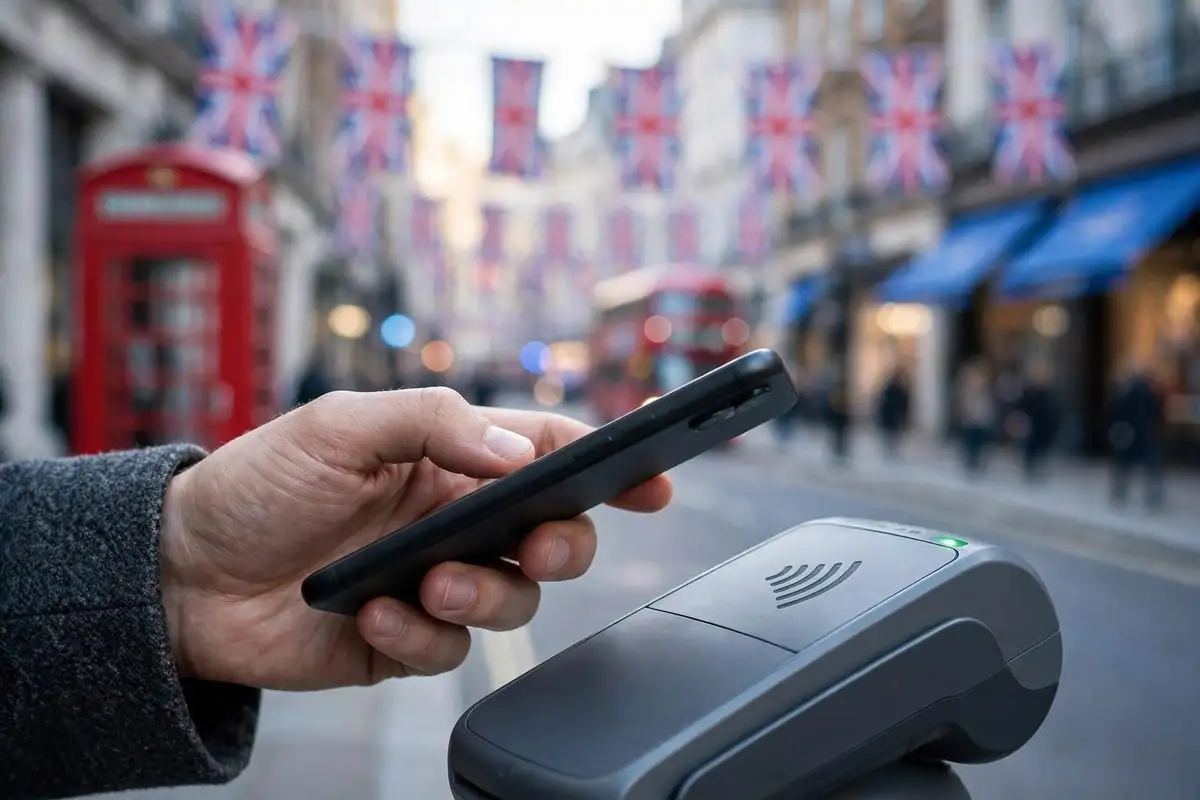
Britain’s competition watchdog has decided that opening the iPhone’s tap-to-pay technology halfway was not enough. On Tuesday 2026-10-20, the Competition and Markets Authority (CMA) published draft proposals that would force Apple to give rival payment apps access to the iPhone’s contactless chip on cheaper and wider terms than Apple offers today. The consultation on the proposals closes on 2026-11-17, and the outcome could reshape which app you use to pay for your coffee. These are proposals under consultation, not a final order: the rules would take effect only after the CMA issues a final decision following its review of responses.
The UK proposal: a conduct requirement for Apple’s NFC and Secure Element
The CMA’s draft conduct requirement targets the two pieces of hardware that make iPhone tap-to-pay work: the NFC chip, which talks to the payment terminal, and the Secure Element, which stores your card credentials. Under the proposals, Apple would have to make that technology available to rival payment and wallet apps on “fair and reasonable” terms, with lower and more predictable fees than developers face now.
The legal basis is the Digital Markets, Competition and Consumers Act 2024. The CMA designated Apple’s mobile platform as holding Strategic Market Status under the Act, a designation that lets it impose binding conduct requirements on how Apple runs its platform in the UK.
It is worth stressing what this is not. This is a proposal under public consultation, not a final order. The consultation closes on 2026-11-17, and the CMA will decide what to do after reviewing the responses.
Why two years of Apple’s NFC platform produced zero UK apps
Apple did open its NFC & SE Platform to outside developers in October 2024. That opening was the product of pressure from regulators around the world. But the CMA says the terms were so unattractive that nothing actually came of it.
Companies told the regulator about a fixed access charge plus fees that rise once an app passes a certain number of users, and non-negotiable conditions that Apple can change, delay or withdraw. The CMA’s conclusion: Apple’s fees are too high for many developers to build a viable business on, and two years after the platform opened, there is no evidence of a single NFC payment app launching in the UK through it.
The numbers show what is at stake. Contactless payments account for 39% of all UK payments, up from 3% a decade ago, according to the CMA. More than 60% of adults use a digital wallet, and Apple Wallet is the most popular wallet in Britain. Control of that flow of payments is a valuable prize.
The EU already did this: free NFC access and five rival wallets
The most useful comparison is the one across the Channel. The European Commission accepted commitments from Apple in July 2024 giving wallet apps free access to the iPhone’s contactless technology via host card emulation. That went much further than what the CMA is proposing now.
| European Union | United Kingdom | |
|---|---|---|
| Regulator | European Commission | Competition and Markets Authority |
| When action was taken | Commitments accepted July 2024 | Draft proposals published October 2026; consultation closes 17 November 2026 |
| Legal mechanism | Binding commitments under EU competition rules | Proposed conduct requirement under the Digital Markets, Competition and Consumers Act 2024, after Strategic Market Status designation |
| Fee terms | Free access for wallet developers | Access on “fair and reasonable” terms; Apple can still charge fees and earn a return |
| Results so far | Vipps launched the first rival iPhone tap-to-pay app in December 2024; PayPal, Curve, BBVA and Klarna followed in 2025 | Zero rival NFC payment apps launched in the UK |
The contrast is clear. Free access in the EU produced five rival tap-to-pay apps in about eighteen months. In the UK, where Apple charged, nothing shipped. The CMA’s milder remedy is a bet that lower fees, rather than free access, will be enough to get British developers building.
“Too difficult for challengers to innovate and compete”
CMA chief executive Sarah Cardell framed the move as opening the door for British firms: “We have heard that high fees, strict terms, and technical restrictions relating to Apple’s contactless technology make it too difficult for challengers to innovate and compete.” She added: “By removing barriers to entry, we can help create the conditions for brilliant British businesses with great ideas to develop new products and services here – from payment apps and digital IDs to travel passes and digital keys.”
The regulator’s case drew support from the Financial Conduct Authority. FCA executive director David Geale said opening the technology would support the expansion of open banking, which lets third-party apps connect directly to your bank account.
Apple pushed back. The company said it had already made NFC and Secure Element access available to developers, and that the CMA should not force an approach with lower privacy and security protections. Apple said it would keep engaging with the regulator.
There is also a precedent from across the Atlantic. A group of US credit unions took Apple to court in 2023 over its control of iPhone tap-to-pay, arguing that locking the NFC chip to Apple Pay stifled competition.
Timeline: how Britain got to the November 17 deadline
- October 2024: Apple opens its NFC & SE Platform to outside developers.
- 2025: Mastercard and Visa announce developer services built on the platform.
- October 2025: The CMA designates Apple’s mobile platform as holding Strategic Market Status under the Digital Markets, Competition and Consumers Act 2024.
- 20 October 2026: The CMA publishes draft proposals for a conduct requirement forcing Apple to open NFC and Secure Element access on fairer terms.
- 17 November 2026: Public consultation closes; the CMA decides on a final order after reviewing responses.
What this means for your iPhone
If the CMA’s proposals become a final order, the most visible change would be choice at the checkout. Bank and fintech apps like Monzo or Revolut could become real default-wallet alternatives to Apple Wallet, letting you tap to pay without Apple’s payment layer in the middle. Banks would no longer need to accept Apple’s terms to reach your phone; they could build on cheaper access of their own.
Beyond payments, the CMA names digital IDs, travel passes and digital keys as services that better access could enable. Your iPhone could hold your train ticket, your office key and your identity documents in apps made by the companies that issue them, rather than only inside Apple Wallet.
Nothing changes tomorrow, though. Until the CMA issues a final decision after the November 17 consultation closes, the rules are only a proposal. And even then, developers need time to build, test and launch apps. The EU timeline suggests a gap of roughly six months between the rules and the first rival apps appearing.
For now, your payments are unaffected. But it is worth knowing how your iPhone handles payments abroad, since wallet availability varies by country. Our iPhone 18 Pro eSIM travel guide covers staying connected and paying while traveling, and the Google Play Store’s move into selling Samsung phones shows how wallet and cashback perks are becoming part of how phones are sold.