
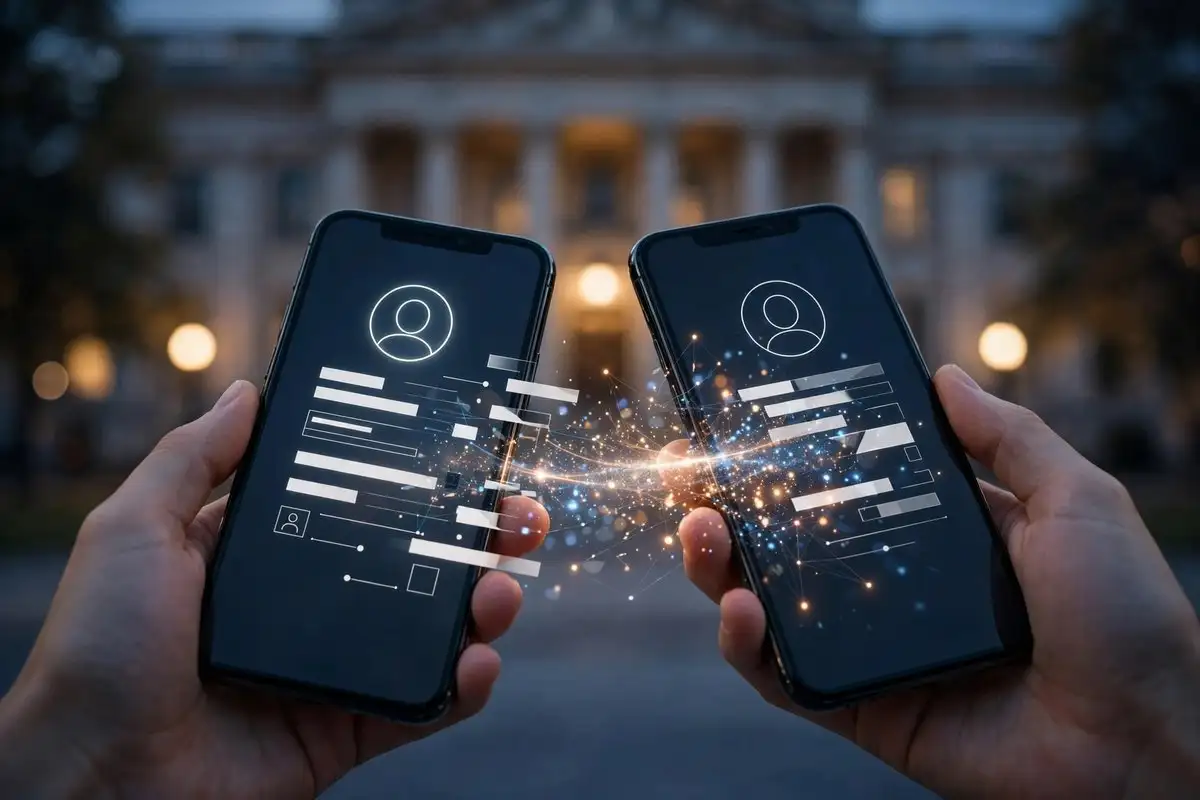
A US startup has asked an Indian court to stop Apple selling iPhones and Apple Watches in the country, and it wants ₹15 billion in damages along the way. The dispute is over NameDrop, the feature that lets two iPhones swap contact details when you hold them close together. The startup, GG Technologies, says Apple copied the idea from its own app, StayTouch, and built it into iOS without a licence.
The case was filed in the Bombay High Court in October, after months of mediation between the two companies collapsed in September. It has not yet been listed for a hearing, and Apple has not publicly responded to the claims. No court has found Apple liable, and the sales ban is something GG Technologies is asking for, not something that has been granted.
The lawsuit in numbers
The filing runs to 781 pages, according to court documents reviewed by TechCrunch, which first reported the case. The headline figures are striking, and they explain why this case is getting attention well beyond the patent world.
| Detail | What the filing says |
|---|---|
| Damages sought | ₹15 billion, about $162 million |
| Court | Bombay High Court, filed October 2026 |
| Injunction sought | Stop sales and imports of iPhones and Apple Watches with NameDrop in India |
| Patent | Indian patent covering contact exchange between nearby devices without manual pairing, granted July 2024 |
| Mediation | Began April 2026, failed September 2026 |
| US case | GG Technologies also sued Apple in the US in April 2026 over related claims |
StayTouch came first, the startup says
GG Technologies was founded in 2018 by Gaurav Goel, an IIT Delhi graduate and former Goldman Sachs banker. The company launched StayTouch in 2019 as a digital alternative to paper business cards: two phones held close together exchange contact details, with no pairing step and no manual entry.
The startup sought patent protection for the technology in the US the same year, filed its Indian patent application in 2021, and received the Indian patent in July 2024. Apple announced NameDrop in June 2023 at WWDC as part of iOS 17, and the feature rolled out to iPhones later that year, with Apple Watch support following. GG Technologies argues that NameDrop copies the core steps its patent protects, and that Apple never sought a licence.
StayTouch has since grown beyond business cards into a messaging platform for events and professional communities, backed by $3.2 million in funding from investors including Cyrille Bollore of Group Bollore and Prisca Clarins of Group Clarins.
What Apple is up against in India
The injunction request is the part of the case that matters most to iPhone owners. GG Technologies wants the court to restrain Apple from selling or importing iPhones and Apple Watches that come with NameDrop preloaded. That is a sweeping ask, and Indian courts do not grant such orders lightly, but the fact that the request is on the table at all puts pressure on Apple to settle or license the technology.
India is also a market Apple cannot afford to treat casually. The company has been expanding its presence there for years, from manufacturing to retail, and it only recently rolled out a redesigned Apple Maps experience across the country. A sales restriction, even a temporary one, would land at a bad time, with the iPhone 18 and iPhone 18e expected to arrive in spring 2027 and the iPhone Duo already on sale.
There is a parallel fight running in the US, where GG Technologies sued Apple in April 2026 over related patent claims. That case, and the Indian one, will both turn on the same question: whether NameDrop does what the patent describes, or whether Apple built something different enough to stand on its own.
What happens next, and what it means for you
For now, nothing changes for iPhone owners in India. The case has not been heard, no hearing date has been set, and NameDrop keeps working exactly as it does today. Patent cases in India typically take years, and the most likely outcomes are a settlement, a licensing deal, or a ruling that narrows the claims.
The realistic scenarios break down like this. Apple settles and pays for a licence, which is how most of these disputes end. The court rejects the injunction but lets the damages claim proceed. Or the case drags on while Apple argues that its implementation differs from the patent. A full sales ban on iPhones in India is the least likely outcome, but it is the one that gives GG Technologies its leverage, and it is why Apple will take this seriously even if the claim looks ambitious.
If you use NameDrop, there is nothing to do today. The feature is not going anywhere in the short term, and Apple has shown before that it can move quickly when its services in India are at risk. The case is worth watching, though, because it is a reminder that the features we treat as built into the phone can turn out to be someone else’s invention, and that the bill for using them can arrive years later.
Sources: TechCrunch, MacRumors, AppleInsider, Indian Television, MacObserver. The damages figure of ₹15 billion converts to about $162 million at current rates.