
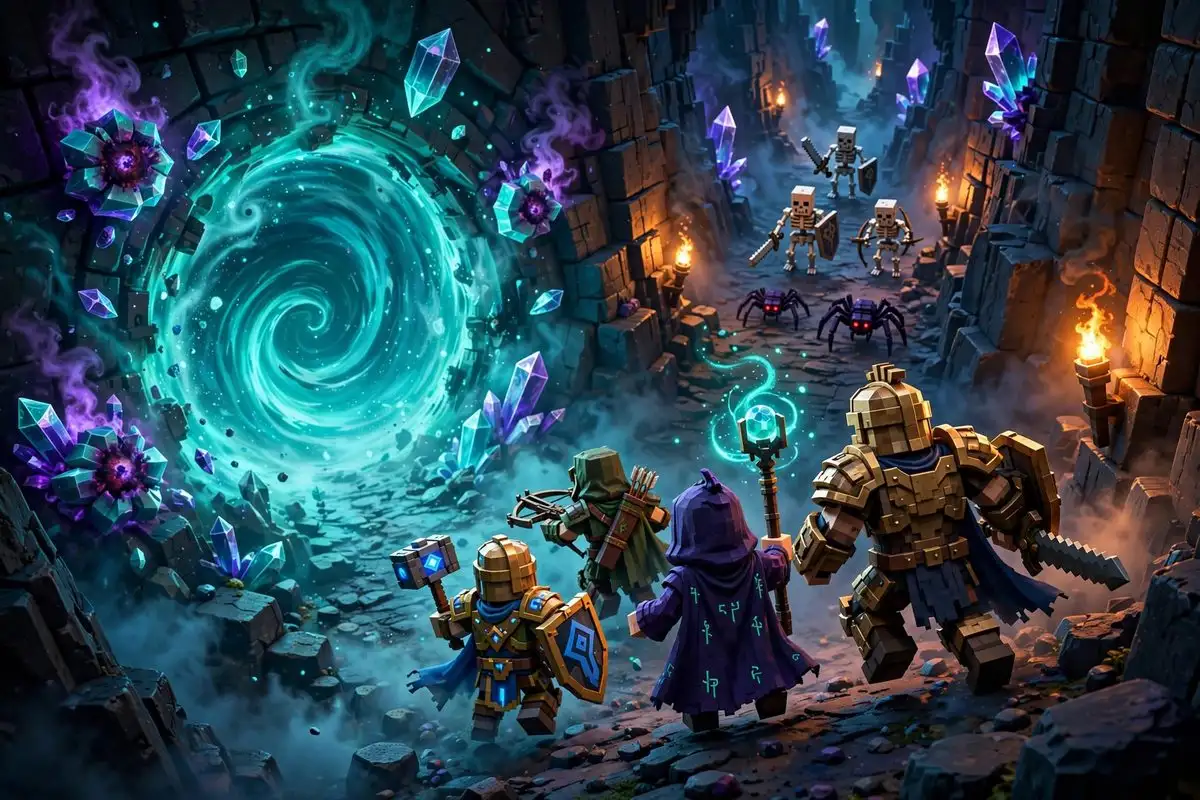
Six years after the original turned a spinoff idea into one of Xbox Game Studios’ most durable franchises, Minecraft Dungeons II is officially out. Mojang Studios and Double Eleven released the co-op dungeon crawler worldwide on September 29, 2026, at a $29.99 entry price and as a day-one addition to Xbox Game Pass. The sequel introduces the Sift, the first new dimension Minecraft has seen in more than 14 years, and it arrives before the dimension lands in the base game in 2027.
What Minecraft Dungeons II costs and where you can play it
The global rollout began at 08:00 UTC on September 29, according to reporting by Tech Insider. The game is out on Windows PC through Steam and the Microsoft Store, Xbox Series X|S, PlayStation 5, Nintendo Switch, and Nintendo Switch 2, plus cloud play for Game Pass subscribers. There is no PS4 or Xbox One version this time, a clear sign that the minimum hardware bar has moved since 2020.
Two editions went on sale at launch:
| Edition | USA | India | What it adds |
|---|---|---|---|
| Standard | $29.99 | roughly ₹3,999 | Full game |
| Deluxe | $49.99 | roughly ₹4,999 | Four hero skins, a Soul Cape, a Blub pet, and guaranteed access to the first two post-launch DLC drops |
The bigger value play is Game Pass: the sequel is bundled with Xbox Game Pass Ultimate and PC Game Pass at no extra cost, and it supports Xbox Play Anywhere, so one Xbox purchase covers both console and Windows PC. The Indian prices were reported by The Sunday Guardian, and UK listings put the base game at £24.99, per TheXboxHub. If you are weighing the subscription, our Xbox Game Pass Ultimate cost breakdown shows how cheaply the library can be had.
12 gear slots instead of 6: the loadout overhaul
The sequel roughly doubles the room you have to build around it: combat slots increase from six to twelve, and armor splits into four separate pieces, helmet, chestplate, leggings, and boots, instead of the original’s single catch-all armor slot, so stat rolls can now be mixed across a full loadout rather than locked to one item.
Talismans are the headline new equipment category. They sit in passive slots and grant steady, always-on bonuses rather than triggered abilities, a numbers layer underneath your weapon and artifact. Early reveals showed the Healing Heart and Tasty Bone talismans as Level 1 options. Two more loot changes stand out: dropped gear can roll random bonus effects, so two copies of the same item can behave differently, and projectile weapons no longer consume arrows, using a cooldown-based refill instead.
Meet the Sift, Minecraft’s first new dimension in 14 years
The Sift is the headliner, and for once that word fits. Reached through rifts that open across the Overworld, the dimension resembles the Overworld on the surface but carries its own hostile mobs, ecosystems, and rules. The Illager High Council, led by the Prime Enchanter, the Supreme Evoker, and the Grand Illusioner, treats it as a staging ground, and soul-corrupted enemies infused with energy pulled from the dimension are the game’s new antagonist faction.
Why this matters beyond one spinoff: Mojang confirmed at Minecraft Live on September 26 that the Sift is coming to Minecraft Java and Bedrock Edition in 2027, with biomes including the Meadows and the Carapace. The End shipped with Minecraft 1.0 back in 2011, which makes the Sift the first new dimension in more than 14 years. Right now, playing Dungeons II is the only official way to visit it. If you have never played the base game at all, start with our explainer on what Minecraft actually is to see how the dimensions fit together.
Early reporting paints the Sift as deliberately alien rather than simply dangerous. Water there causes fire damage instead of extinguishing it, a mob called the Singer spawns echo golems through song, and coral-hued regions like the Lullaby Hills hide corrosive pools. The headline fight is the Twisted Warden, a superboss with wide area attacks and sonic-boom abilities, the benchmark for late-game builds.
The world is connected now, and the camp NPCs do real work
The original structured its campaign as a table of discrete, selectable missions. That is gone. Players are dropped into large, connected regions with settlements, narrative events, and points of interest discovered by walking into them. Caves and ruins can generate with different layouts on repeat visits, dungeons pull from a wider biome pool that includes the Deep Dark and Ancient Cities, and fast travel runs through minecart stations. (For context on the base game’s underground, see our introduction to mining in Minecraft.)
Enchantments are no longer baked permanently into items. Players pick up enchantment books, confirmed examples include Fire Aspect, Thundering, Healing Smite, and Ender Mines I, and store them in a personal library. An NPC called the Enchantsmith applies them to any gear slot and lets you move them later, and enchantments level up over time. A second NPC, the Blacksmith, upgrades underpowered gear to your current power level and rerolls random bonus effects. Both services cost Echo Shards, earned by clearing dungeons and killing soul-corrupted enemies.
Jumping, mixed co-op, and the new arsenal
Heroes can jump for the first time in the Dungeons series, which reshapes both traversal and combat: jumping clears obstacles and feeds a new jump attack that strikes downward with added momentum. Melee gains multi-swing combos, and jump attacks and combo finishers can trigger your equipped enchantment effect, so abilities like poison clouds now land on a specific hit. The dodge roll stays.
Co-op supports one to four players and adds mixed co-op, where players sharing a console or PC can fill the remaining party slots with players connecting online, something the original could not do. Public matchmaking and direct party codes both work, every player can open a personal mini-inventory simultaneously, loot distribution is automated, and downed teammates revive faster when multiple players assist.
Weapon variety expands past the original set of sword, bow, crossbow, shovel, and pickaxe. Confirmed additions include the Tornado Blade, Battlestaff, War Hammer, Trickbow, sickles, and dual daggers. Per gameplay breakdowns, the Tornado Blade deals 60 percent of standard weapon damage per swing but hits secondary targets 30 percent harder, a crowd-control pick, while the War Hammer is built around heavy ground-tremor area attacks. New utility items include the Tasty Bone, which summons a wolf companion, and the Creeper Candle, a trap that detonates like a creeper after a short delay.
Do you need to play the original Minecraft Dungeons first?
No. Dungeons II is a standalone adventure with its own villains and worlds, and the narrative does not assume you fought through the original’s Arch-Illager storyline. Playing the 2020 game gives more context for how thoroughly the systems changed, and it remains the only way to qualify for the shared Hero Cape cosmetic, but it is not required to follow the plot.
| Feature | Minecraft Dungeons (2020) | Minecraft Dungeons II (2026) |
|---|---|---|
| Mission structure | Linear mission-select table | Open, connected regions explored freely |
| Combat slots | 6 | 12 |
| Armor slots | 1 (single armor piece) | 4 (helmet, chestplate, leggings, boots) |
| Enchantments | Fixed to the item | Collected as books, applied via the Enchantsmith |
| Ranged ammo | Limited arrow pickups | Unlimited, cooldown-based refill |
| Jumping | Not available | Available, feeds jump attacks |
| Co-op | Local and online in separate paths | Mixed local-plus-online parties |
One of the busiest release days of the year
Dungeons II did not launch alone. September 29 was a pile-up: The Witcher 3: Wild Hunt Remastered released with a free upgrade for existing owners (Pure Xbox), while EA Sports FC 27 and Silent Hill: Townfall led the PlayStation Store update alongside roughly 50 other PS5 and PS4 games (TalkEsport). That makes the day-one Game Pass placement look shrewd: on a release calendar this crowded, being free to subscribers is the surest way to be the game people try first.
What the Sift means for players in 2026 and 2027
Mojang did not just iterate on a dungeon crawler; it used the sequel as the first playable introduction to a dimension that reshapes the base Minecraft game next year. The Sift’s rules, mobs, and biomes are all auditioning in Dungeons II before they land in Java and Bedrock in 2027. For $29.99, or nothing on Game Pass, this is the cheapest early ticket into Minecraft’s biggest expansion in over a decade, and a legitimately different game underneath.